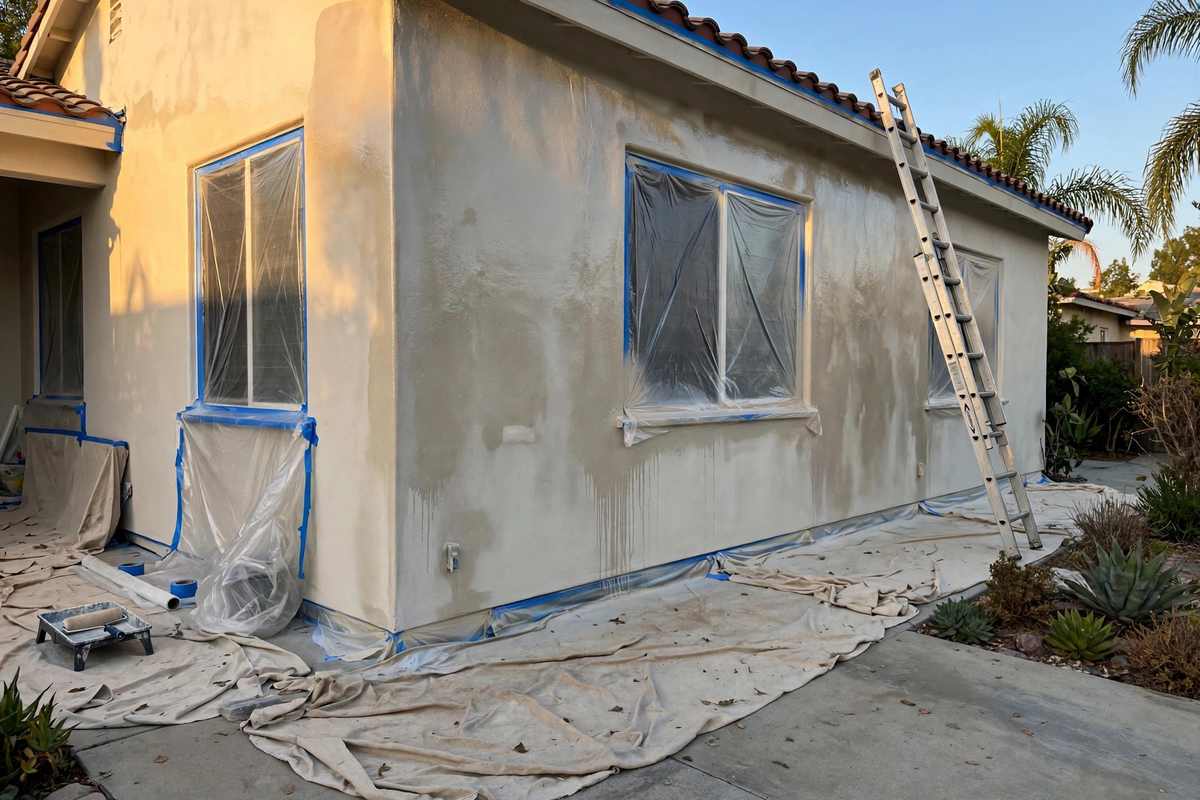
Los Angeles gives exterior paint a hard life: strong sun on south and west walls, marine air near the coast, Santa Ana dryness inland, and winter rain finding every unsealed joint. Paint applied over chalk, mildew, failed caulk, or bare wood that was never primed will fail no matter how good the topcoat is. Preparation is the project; painting is the last step.
Step 1: wash and kill the mildew
Wash the exterior to remove dirt, chalk, and mildew, and treat mildew rather than painting over it. Keep pressure moderate on stucco and lower on wood siding, and keep the wand moving so water is not driven behind siding or into wall cavities. Let the surface dry fully before the next step; painting over a damp wall traps moisture that later blisters the coating.
Step 2: scrape, sand, and repair what the sun left behind
Scrape loose and peeling paint to a sound edge, feather-sand the transitions, and repair the substrate underneath: cracked stucco, split wood, damaged trim, and failed patches. In pre-1978 homes, treat paint disturbance as a lead-safety question first and follow the applicable safe-work rules before sanding or scraping. A smooth topcoat over a failed substrate is a short-lived topcoat.
Step 3: caulk joints, seal penetrations, and prime bare substrate
Caulk joints where different materials meet, seal penetrations for pipes, vents, and fixtures, and prime every bare spot and repair. Spot-priming matters as much as full priming on a repaint: bare wood and patched stucco absorb topcoat unevenly and show through as flashing and early wear. Mask windows, fixtures, and landscaping properly, because cleanup after a sloppy mask costs more time than masking did.
HPOZ and coastal notes for Los Angeles homes
In a Historic Preservation Overlay Zone, exterior changes, including colour and material changes where visible, can trigger Planning Department review, and the district's preservation plan governs what needs approval. Near the coast, an additional coastal approval layer can apply depending on the parcel. Check both before choosing a colour or a material change, not after the first coat is on. For stucco, wood, and trim repair scopes that sit behind a repaint, see our exterior painting page and our interior painting page for the interior counterpart, and for hillside homes in Echo Park or Mount Washington, plan access and staging for steep lots at the same time as the colour.
Frequently Asked Questions
When is exterior painting season in Los Angeles?
Dry, mild weather with surfaces that can dry between coats. Avoid painting over damp walls, in extreme heat on sun-baked surfaces, or ahead of rain that will hit uncured paint.
Why does exterior paint peel in Los Angeles?
Usually moisture, sun, or skipped prep: painting over chalk, mildew, failed caulk, or unprimed repairs. The topcoat is rarely the sole cause.
Do I need to prime before repainting?
Bare substrate and every repair need primer. Sound, previously painted surfaces in good condition may need only spot priming, but bare spots must never be topcoated directly.
Does an HPOZ affect exterior paint colour?
It can. Exterior changes in an HPOZ, including visible colour and material changes, can require Planning Department approval under the district's preservation plan. Check before painting.
Get help with renovations in Los Angeles
If you are planning exterior painting preparation in the City of Los Angeles, start with a conversation about scope, permits, and sequence before you commit to finishes or a start date.
Call Radiant Renovations Co. at +1 (424) 337-6597. The business is open 24 hours, 7 days a week, and is located at 352 W Martin Luther King Jr Blvd, Los Angeles, CA 90037.