Substrate preparation
Old tile, adhesive and damaged substrate come out, floors are levelled, and shower walls are checked for sound, plumb surfaces before tile starts.
Tile only looks as good as the substrate beneath it. Level, waterproofed and properly prepared, tile lasts decades; set over a moving or damp base, it cracks and loosens within months. This page explains what tile installation involves across floors, showers and backsplashes in Los Angeles homes.
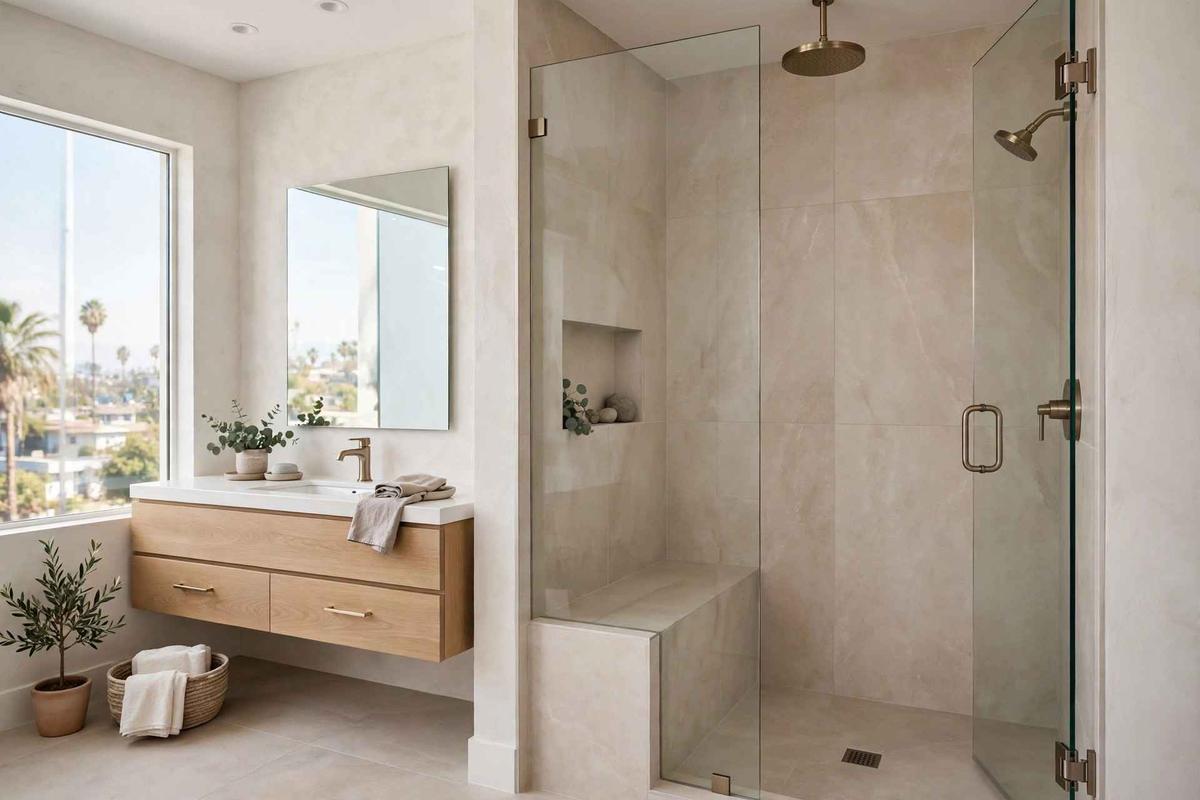
Tile installation sets porcelain, ceramic, stone or mosaic tile on floors, shower walls, tub surrounds and backsplashes, with waterproofing where water is present, levelling where floors are uneven, and grout and sealant finishing the joints. Shower tile is a waterproofing job; floor tile is a levelling job; backsplash tile is a layout job — and a written scope should say which one each area is.
Tile cost varies by tile size and material, substrate condition, waterproofing scope and layout complexity; pricing is set out in a written estimate after the site visit. The scope below is what a written estimate should itemise instead.
Tile scopes differ by area, but substrate, layout and finishing stages are shared. The stages below cover floors, showers and backsplashes.
Old tile, adhesive and damaged substrate come out, floors are levelled, and shower walls are checked for sound, plumb surfaces before tile starts.
Shower membranes, seams, corners and drain connections are built as one system before tile, since tile and grout alone are not waterproof.
Tile layout is planned from the most visible wall or floor line, so cuts fall at edges and patterns stay centred where they matter.
Tile is set with the right adhesive and levelling system for its size, so large-format tile does not lip and small mosaic stays flat.
Joints are grouted, movement joints are sealed rather than grouted, and stone is sealed where the material requires it.
The finished tile is checked for lippage, hollow spots and grout consistency, and care notes for the tile and grout are left with the household.
The area is measured, the substrate is checked, and the tile, pattern and layout are chosen with cuts and focal points planned.
Substrate repair and levelling, then the waterproofing system in showers and wet areas, inspected or cured before tile covers it.
Tile is set in sequence — floors before walls where the design requires it — with levelling and spacing kept consistent.
Grout goes in after adhesive cures, movement joints are sealed, and the surface is cleaned and checked.
The finished tile is walked and checked against the written scope, with any lipped or hollow tile corrected before handover.
The area is measured, the substrate is checked, and the tile, pattern and layout are chosen with cuts and focal points planned.
Porcelain, ceramic and stone are cut wet for clean edges, with layout planned so the hardest cuts fall where they are least visible.
Clips and wedges keep large-format tile flat across the floor or wall while adhesive cures.
Level and moisture checks map the base before tile starts, so levelling and waterproofing are scoped up front.
Membrane, banding and sealant are applied as a continuous system at seams, corners and penetrations.
Grout is applied and cleaned in stages, and movement joints are sealed with flexible sealant rather than rigid grout.
Silver Lake tile work in 1920s bathrooms and kitchens often means small-format or period-appropriate tile over older, uneven substrates. Levelling and waterproofing decide the result more than tile choice.
Los Feliz tile scopes range from Spanish Revival bathrooms with patterned tile to mid-century kitchens with large-format floors. In both, the substrate and layout plan come before the tile order.
Where this work fits in Los Angeles: Silver Lake · Los Feliz · Sherman Oaks · Studio City · Koreatown · Hollywood.
Tile failures almost always start below the tile. These are the problems to scope for.
Ask a pro →Cracks trace to substrate movement, missing expansion joints or an out-of-level floor — all fixed in preparation, not by re-grouting.
A leak behind tile means the membrane, drain or a joint failed. Waterproofing is built and checked before tile, not after.
Large tile lips when the floor is uneven or levelling is skipped. Levelling systems and a flat substrate prevent it.
Grout cracks at movement joints that should have been sealed, and stains where sealing was skipped. Joints are finished as a system, not as an afterthought.
Radiant Renovations Co. holds a 4.8-star aggregate rating. No review count is published here, and no individual review quotations are shown on this page — full review text is shown on Google.
Porcelain is the common choice for water resistance and durability, with mosaic or small-format tile for shower floors where slope to the drain matters. The substrate and waterproofing matter as much as the tile.
Tile alone, with no plumbing, electrical or structural change, is generally cosmetic work. If the scope moves drains, alters waterproofing membranes or opens walls, the permit path changes — confirm the scope against current LADBS rules.
Tile and grout are not waterproof. The membrane system behind tile is what keeps water out of walls and floors, and it must be built before tile goes on.
It depends on area, tile size and substrate preparation. Waterproofing cure times and grout stages add days that a tile-only estimate hides.
Call (424) 337-6597 to talk through your tile: area, substrate, waterproofing and layout, before any tile is ordered. Radiant Renovations Co. is open 24 hours, 7 days a week.
Get Free Quote (424) 337-6597 →Call (424) 337-6597 to talk through your project. Radiant Renovations Co. is open 24 hours, 7 days a week. Tell us what you want to change and we will talk through what it takes, including the permit path for the scope.