Washing and inspection
Surfaces are washed and inspected for cracks, rot, peeling and failed caulk, so repairs are scoped before paint rather than discovered under it.
Exterior paint in Los Angeles faces sun, heat, Santa Ana winds and, in fire-zone areas, ember and heat exposure that interior paint never meets. This page explains what exterior painting involves — stucco and wood preparation, priming, and finishes chosen for exposure — and where HPOZ review or fire-zone rules touch the scope.
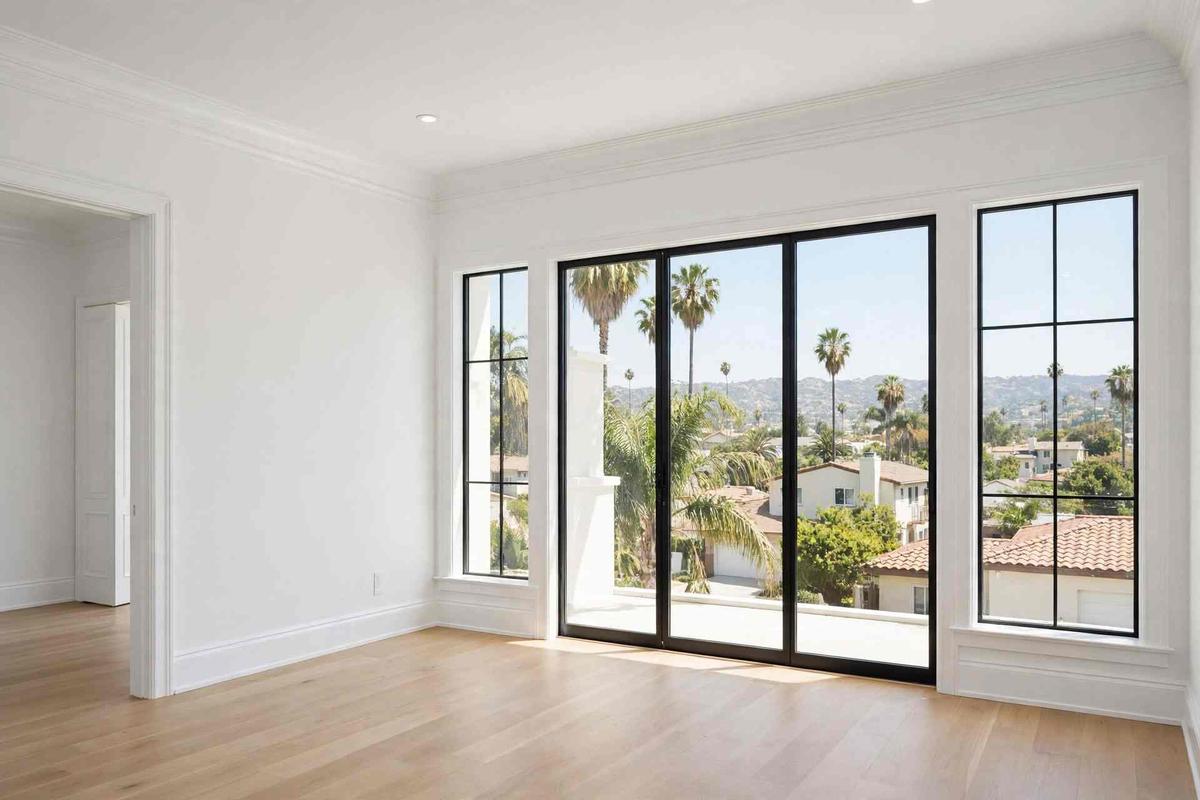
Exterior painting prepares stucco, wood siding, trim, doors and eaves — washing, scraping, patching, caulking and priming — then applies paint systems suited to each surface and exposure. Stucco needs crack repair and elastomeric or masonry-appropriate coatings where the surface calls for them; wood needs rot repair and priming before paint, or the new coat fails with the old wood beneath it.
Cost varies by house size, surface condition, storeys and access; pricing is set out in a written estimate after the site visit. The scope below is what a written estimate should itemise instead: preparation, repairs, priming, coats and access.
An exterior painting scope covers the stages below. A full-house repaint and a trim-only refresh share the preparation discipline; they differ in area.
Surfaces are washed and inspected for cracks, rot, peeling and failed caulk, so repairs are scoped before paint rather than discovered under it.
Stucco cracks are patched, rotted wood is replaced, and failed caulk at windows, doors and trim is renewed.
Bare wood, patched stucco and stained areas are primed, so finish coats bond and cover evenly.
Stucco, wood, trim and doors each receive the coating suited to that surface and exposure, applied in even coats.
Trim, doors, fascia and eaves are finished as their own scopes, since they weather differently from wall surfaces.
Grounds, fixtures and landscaping protection come off, and the house is walked from the street and close up against the written scope.
Stucco, wood, trim and prior paint are surveyed, and repairs, access and any HPOZ or fire-zone considerations are noted.
Washing, scraping, patching, rot replacement, caulking and priming prepare every surface before finish paint.
Walls, then trim, doors and eaves, are painted in even coats suited to each surface, with weather windows respected.
Edges, joints and touch-ups are finished, and fixtures and hardware go back.
The house is walked from the street and close up against the written scope, with any thin, missed or uneven area corrected.
Stucco, wood, trim and prior paint are surveyed, and repairs, access and any HPOZ or fire-zone considerations are noted.
Surfaces are washed and scraped to sound paint, so new coats bond to solid material rather than peeling layers.
Cracks are patched and rotted wood replaced before paint, since paint over damage fails with the damage beneath it.
Sprayers cover large stucco areas evenly, while brushes cut in trim, doors and details where control matters.
Ladders, scaffolding or lifts reach upper storeys and eaves safely, and access needs are scoped with the house height.
Landscaping, windows, fixtures and walkways are masked and covered, so paint lands on the house, not on everything around it.
Woodland Hills exterior painting on larger Valley lots often means full-house stucco and trim repaints with straightforward access, plus sun-exposed south and west walls that need finishes chosen for heat.
Silver Lake exterior painting in hillside areas adds access, staging and fire-zone awareness: steep lots, narrow streets and, on some parcels, Very High Fire Hazard Severity Zone considerations for exterior materials.
Where this work fits in Los Angeles: Woodland Hills · Encino · Sherman Oaks · Silver Lake · Los Feliz · Highland Park.
Exterior paint fails from the surface outward. These are the problems to scope for.
Ask a pro →Paint bridges a stucco crack for a season, then the crack reappears through it. Cracks are patched and the cause checked first.
Paint over rot fails with the wood beneath it. Rotted trim and siding are replaced, not painted over.
Paint over peeling, dusty or unprimed surfaces peels again. Washing, scraping and priming come before finish coats.
In a Historic Preservation Overlay Zone, exterior changes — including colour and material where visible — may need review. That check comes before painting, not after.
Radiant Renovations Co. holds a 4.8-star aggregate rating. No review count is published here, and no individual review quotations are shown on this page — full review text is shown on Google.
It depends on surface, exposure and prior preparation. Sun-exposed stucco and wood weather faster than shaded walls, and preparation quality matters more than a fixed interval — this page gives no year figure as a rule.
Painting alone, with no structural or systems change, is generally cosmetic work. In an HPOZ, exterior changes may still need preservation review — check the parcel's HPOZ status before work starts.
Parcels in a Very High Fire Hazard Severity Zone face Chapter 7A construction requirements for certain exterior work. Whether a repaint triggers those requirements depends on the scope — confirm it for the parcel rather than assuming.
Often yes, but paint needs suitable temperature and dryness to cure. Weather windows are respected in scheduling, and wet or excessively hot days are avoided for finish coats.
Call (424) 337-6597 to talk through your exterior painting: surfaces, repairs, exposure and any HPOZ or fire-zone check for your parcel. Radiant Renovations Co. is open 24 hours, 7 days a week.
Get Free Estimate (424) 337-6597 →Call (424) 337-6597 to talk through your project. Radiant Renovations Co. is open 24 hours, 7 days a week. Tell us what you want to change and we will talk through what it takes, including the permit path for the scope.